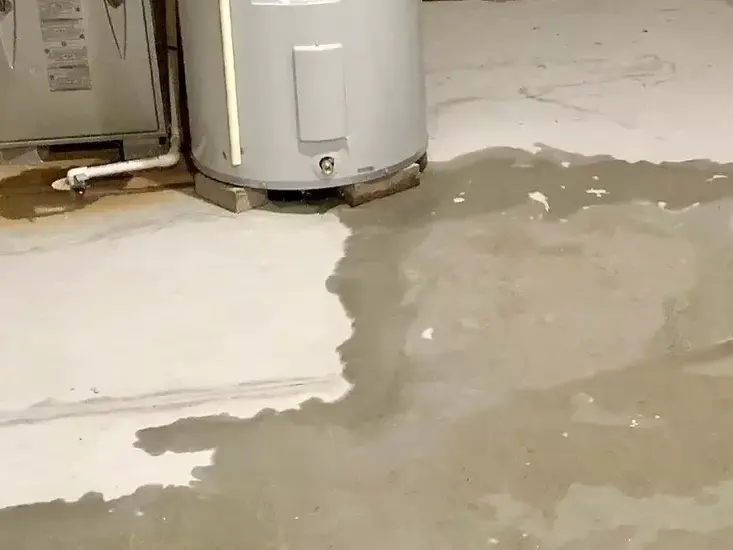
Where water heaters fail in Franklin homes
Where the tank sits decides how much damage a failure does. Many Franklin homes put the water heater in the garage, where a leak runs across concrete toward the door. Others use an interior closet next to finished rooms, an attic platform in a two-story house, or the crawlspace in older homes downtown. A tank in the attic or on a second floor is the worst case, because every gallon ends up in the ceiling and walls below.
- Tanks that rust through at the bottom after 10 to 15 years
- Failed supply connectors and flex lines on top of the tank
- Relief valves that open and discharge without a drain line
- Drain pans that are missing, too small or not piped to a drain
How the cleanup is done
The extraction crew pulls standing water off floors and out of carpet next to the tank. The tech who does the walkthrough then maps moisture into the walls, under flooring and through the ceiling below if the heater is upstairs. Water from a tank often carries rust and sediment, and it moves under laminate and vinyl plank where it cannot be seen. Baseboards may come off so air can reach the bottom of the drywall.
The drying team sets air movers, LGR dehumidifiers and, for hardwood, floor drying mats, with readings every day until the materials reach the drying goal. The Department of Energy water heating page covers tank life and maintenance.
Check the date on the tank label. A tank past about 10 years in a closet or attic is worth replacing before it fails, with a drain pan piped to a drain.
After the dry-out
A plumber installs the new heater, ideally with a pan and a leak sensor where it sits over living space. Restoration covers the drying and documentation of the damage. Related pages: appliance supply line leak cleanup and ceiling leak water damage. The EPA WaterSense leak checklist helps find small leaks early.