Category 3 from the first minute

Sewage Backup Cleanup in Franklin, TN

Sewage backup is Category 3 water the moment it happens, whether it comes up a floor drain, a toilet or a crawlspace cleanout. The restoration team contains the area, removes contaminated porous materials, treats and dries what remains, and documents it for the claim.

(888) 849-5796Call for sewage backup cleanup
24/7 dispatch IICRC S500 drying goal Daily moisture logs
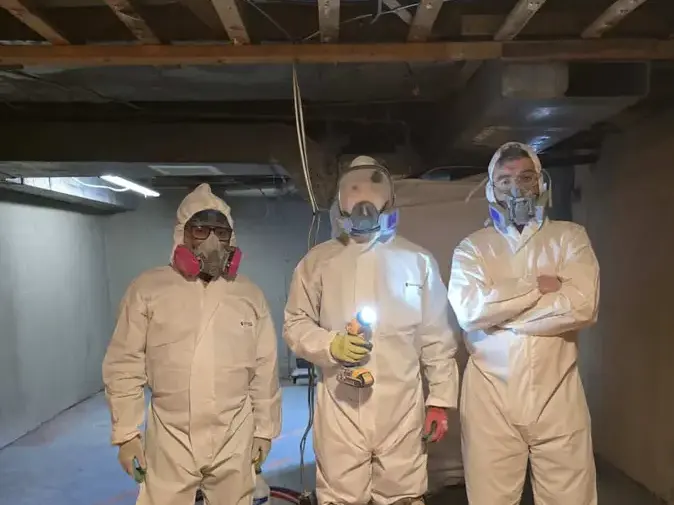
Three workers in protective suits and respirators in a basement during a sewage cleanup
Water categoryCategory 3, always
Common sourcesFloor drains, toilets, cleanouts
ProtocolContainment, PPE, antimicrobial
Dispatch24/7 in Franklin
First steps

What to do the moment you find a sewage backup

  1. Stop using the plumbing

    No flushing, showers, dishwasher or laundry. Every gallon sent down the drain can come back up.

  2. Keep people and pets out

    Sewage carries bacteria and viruses. Keep children, pets and anyone with a weak immune system away from the area.

  3. Do not mop or vacuum it

    Mopping spreads contamination and a household vacuum aerosolizes it. Close the door to the area if you can.

  4. Photograph from a distance and call

    Photograph the backup from the doorway, note which fixture it came from, then call for containment and a plumber.

Loss ledger
Water categoryCategory 3 black water
Typical classClass 2 to 3 with flooring and lower walls
EquipmentContainment, PPE, extraction, HEPA air scrubbers, EPA-registered antimicrobial, dehumidifiers
Drying goalWithin 2 to 4 points of a dry reference material after cleaning
Typical cost ranges

What does sewage backup cleanup cost in Franklin, TN?

In Franklin, TN, sewage backup cleanup typically runs $2,500 to $15,000. A toilet overflow onto tile sits at the low end; a floor drain or main line backup through a finished basement or crawlspace, with carpet, drywall and insulation removed, sits at the high end.

Small bathroom backup

$2,500 to $4,500
  • Containment and PPE
  • Hard surface cleaning
  • Antimicrobial and drying

Basement or several rooms

$4,500 to $9,500
  • Carpet, pad and drywall removed
  • HEPA air scrubbing
  • Moisture mapping

Main line or crawlspace

$9,500 to $15,000+
  • Crawlspace barrier and insulation removed
  • Full decontamination
  • Complete documentation

The drivers are the water category, the square footage that got wet, the material class (vinyl and drywall versus plaster, heart pine and hardwood) and how fast drying started. For a planning number, try the Franklin water damage cost calculator.

How the work is held to standard

How sewage backup cleanup is handled in Franklin

Every Franklin job runs in the same order, because the order is what separates a finished dry-out from a cosmetic one.

Rapid local response

Franklin water damage pros dispatch around the clock, because water keeps wicking into subfloor, plaster and crawlspace framing after dark.

IICRC S500 drying standard

The drying team works to IICRC S500, the industry drying standard: structural drying, not just surface drying.

Claim-ready documentation

A moisture map, daily readings and timestamped photos go into the file your insurer reviews.

Williamson County water experts

Crawlspaces over clay, attic air handlers and plaster walls downtown are everyday work in Franklin.

  1. Map the moisture

    The tech who does the walkthrough finds the source and maps wet materials with thermal imaging and pinless meters before any equipment goes down.

  2. Extract

    The extraction crew pulls standing water with truck-mounted or portable extraction, so the water leaves the house instead of wicking further.

  3. Set the drying

    The drying team sizes air movers to each room's evaporation load and runs LGR dehumidifiers, with desiccants for dense materials.

  4. Read it daily

    Readings go into the drying log every day, and the equipment moves to whatever is still giving up water.

  5. Verify and document

    Equipment comes out when the wet material sits within 2 to 4 points of a dry reference, and the logs go into the claim file.

Why sewage backs up in Franklin homes

The historic homes around downtown and Hincheyville often still drain through cast iron and clay lines that crack, sag and let tree roots in. Newer subdivisions have PVC lines, but grease, wipes and roots still block laterals. During heavy storms, overloaded sewer mains can surcharge and push water back toward the lowest fixture in the house: a basement floor drain, a lower-level shower or a crawlspace cleanout.

  • Tree roots in older cast iron and clay laterals
  • Grease and wipes blocking the main line
  • Storm surcharges in the public sewer
  • Failed ejector pumps in basement bathrooms

The Category 3 protocol

Sewage backup is Category 3 the moment it happens, and porous materials touched by Category 3 water get removed, not dried. The mitigation team sets containment with plastic sheeting and negative air, wears PPE (respirators, gloves, suits and boots), and runs HEPA air scrubbers to keep contaminants out of the rest of the house. The extraction crew removes the water and solids, then carpet, pad, drywall above the wet line, insulation and crawlspace vapor barrier touched by the sewage are bagged and removed.

Hard surfaces are cleaned and then treated with an EPA-registered antimicrobial at its label dwell time before any drying starts. The CDC sanitation guidance explains the health risks of wastewater exposure.

A backwater valve on the sewer lateral stops the public sewer from pushing water back into the house. A plumber can tell you if your home has one.

Drying and the claim

After removal and cleaning, the drying team dries the structure to the drying goal with daily readings. The claim file carries photos taken before removal, the removal list, the antimicrobial record and the drying logs. Many policies need a water backup endorsement for sewage losses. Flood water from outside is covered on flash flood cleanup, and a flooded lower level on basement flooding cleanup. EPA information on sanitary sewer overflows covers why sewers back up.

Related services

Related water damage services in Franklin

Service area

Sewage backup cleanup across Franklin

The Franklin restoration crew handles sewage backup cleanup across ZIP codes 37064, 37067 and 37069, from Historic Downtown and Hincheyville to Westhaven, Cool Springs, McKay's Mill and Berry Farms.

The same crews cover Brentwood, Thompson's Station, Spring Hill, Nolensville, Arrington, College Grove, Fairview and Leiper's Fork.

Franklin, TN and the Williamson County towns around it

Every Franklin area and ZIP

Questions

Sewage Backup Cleanup questions in Franklin, TN

Is sewage backup really dangerous?

Yes. Sewage is Category 3 water carrying bacteria, viruses and parasites. That is why the cleanup uses containment, PPE and removal of porous materials.

Can carpet touched by sewage be cleaned?

No. Carpet, pad and other porous materials touched by sewage are removed and discarded, not cleaned and dried.

Does insurance cover a sewage backup?

Many homeowners policies need a separate water backup or sewer backup endorsement. Coverage depends on your policy, so it is worth checking with your own insurer.

Who fixes the sewer line?

A plumber clears or repairs the line. Restoration handles the containment, removal, cleaning, antimicrobial treatment and drying.

How long does sewage cleanup take?

Removal and cleaning usually take a day or two, and drying afterward often takes three to five more days.

What is an antimicrobial treatment?

An EPA-registered antimicrobial product applied to cleaned hard surfaces and left for its label dwell time, to reduce contamination before drying.

Emergency water removal, 24/7

Sewage backup in your Franklin home? Call now.

Containment, Category 3 removal, antimicrobial treatment and drying across Williamson County.

(888) 849-5796Get the sewage contained tonight
Call (888) 849-5796 24/7