Dried to the reading, not the look

Structural Drying and Dehumidification in Franklin, TN

Surfaces dry in a day; framing, subfloor, plaster and heart pine do not. The drying team maps the moisture, sizes air movers and dehumidifiers to each room and keeps the equipment running until the readings reach the IICRC S500 drying goal.

(888) 849-5796Start the Franklin dry-out now
24/7 dispatch IICRC S500 drying goal Daily moisture logs
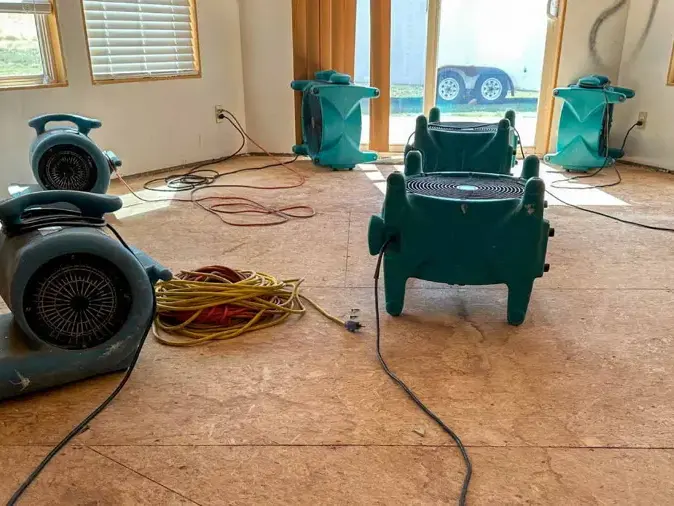
Air movers and a dehumidifier drying a room with the flooring pulled back
StandardIICRC S500
EquipmentAir movers, LGR and desiccant units
ReadingsDaily, logged for the claim
Dispatch24/7 in Franklin
First steps

What to do the moment you find wet walls and floors

  1. Stop the water first

    Drying cannot start until the source is stopped: close the main or the appliance valve, or wait for flood water to recede.

  2. Open up airflow

    Open closet and cabinet doors in wet rooms and lift rugs so air can reach the floor. Keep windows closed on humid days.

  3. Do not use heat alone

    Cranking the heat without dehumidification just moves water into the air and into dry rooms.

  4. Call for a moisture map

    The dry-out plan depends on what is wet inside the walls and floors, which only meters and thermal imaging show.

Loss ledger
Water categoryAny, after cleaning of Category 2 and 3
Class of waterClass 1 to 4 sets the equipment load
EquipmentAir movers, LGR dehumidifiers, desiccants for Class 4, floor mats, cavity injection
Drying goalWithin 2 to 4 points of a dry reference material
Typical cost ranges

What does structural drying cost in Franklin, TN?

In Franklin, TN, structural drying typically runs $1,200 to $8,000 depending on how many rooms are wet, the class of water and how long the equipment runs. A single room of drywall sits at the low end; hardwood, plaster or crawlspace framing across several rooms sits at the high end.

One or two rooms

$1,200 to $2,800
  • Air movers and one dehumidifier
  • Three to five days
  • Daily readings

Several rooms or hardwood

$2,800 to $5,500
  • Floor drying mats
  • Multiple dehumidifiers
  • Moisture mapping

Class 4, plaster or crawlspace

$5,500 to $8,000+
  • Desiccant dehumidification
  • Longer drying time
  • Full drying logs

The drivers are the water category, the square footage that got wet, the material class (vinyl and drywall versus plaster, heart pine and hardwood) and how fast drying started. For a planning number, try the Franklin water damage cost calculator.

How the work is held to standard

How structural drying is handled in Franklin

Every Franklin job runs in the same order, because the order is what separates a finished dry-out from a cosmetic one.

Rapid local response

Franklin water damage pros dispatch around the clock, because water keeps wicking into subfloor, plaster and crawlspace framing after dark.

IICRC S500 drying standard

The drying team works to IICRC S500, the industry drying standard: structural drying, not just surface drying.

Claim-ready documentation

A moisture map, daily readings and timestamped photos go into the file your insurer reviews.

Williamson County water experts

Crawlspaces over clay, attic air handlers and plaster walls downtown are everyday work in Franklin.

  1. Map the moisture

    The tech who does the walkthrough finds the source and maps wet materials with thermal imaging and pinless meters before any equipment goes down.

  2. Extract

    The extraction crew pulls standing water with truck-mounted or portable extraction, so the water leaves the house instead of wicking further.

  3. Set the drying

    The drying team sizes air movers to each room's evaporation load and runs LGR dehumidifiers, with desiccants for dense materials.

  4. Read it daily

    Readings go into the drying log every day, and the equipment moves to whatever is still giving up water.

  5. Verify and document

    Equipment comes out when the wet material sits within 2 to 4 points of a dry reference, and the logs go into the claim file.

Structural drying, not just surface drying

A floor can feel dry to the hand while the subfloor, the bottom plate of the wall and the back of the drywall are still wet. That is the difference between surface drying and structural drying. IICRC S500 is the industry drying standard, and it sets out how a water loss is classified, how the drying equipment is chosen and how dry is verified. The finish line is a reading, not a feeling: wet materials are dry when they sit within 2 to 4 points of a dry reference material in an unaffected part of the same building.

How the equipment is sized

The tech who does the walkthrough maps moisture with thermal imaging and pinless and pin meters, then sets the class of water. Class 1 through 4 sets how much equipment a room needs: Class 1 is a small area of low-porosity material, Class 3 is wet walls, ceilings and carpet, and Class 4 is dense, slow materials such as hardwood, plaster, brick and concrete.

  • Air movers set to the evaporation load of each room
  • LGR dehumidifiers that keep pulling water out of humid Middle Tennessee air
  • Desiccant dehumidifiers for Class 4 materials and cool crawlspaces
  • Floor drying mats for hardwood and cavity injection for wall and cabinet voids

The EPA moisture guidance explains why the first 24 to 48 hours matter so much.

Franklin's summer humidity is why dehumidification matters here. Opening windows on a muggy day can add water to a house faster than fans remove it.

Franklin materials that dry slowly

The historic homes around Main Street and Hincheyville carry plaster on wood lath, heart-pine floors and old-growth framing. Those dense materials hold water and give it up slowly, so they are Class 4 work with desiccants and a longer schedule. Newer homes bring engineered hardwood, which can delaminate if dried too hard, and crawlspace framing, which needs its own enclosed dehumidification; see crawl space water damage. The drying team records readings daily and moves equipment to whatever is still wet. Equipment stays until the readings say dry. The UT Extension publishes home moisture guidance for Tennessee households, and extraction before drying is covered on water extraction.

Related services

Related water damage services in Franklin

Service area

Structural drying across Franklin

The Franklin restoration crew handles structural drying across ZIP codes 37064, 37067 and 37069, from Historic Downtown and Hincheyville to Westhaven, Cool Springs, McKay's Mill and Berry Farms.

The same crews cover Brentwood, Thompson's Station, Spring Hill, Nolensville, Arrington, College Grove, Fairview and Leiper's Fork.

Franklin, TN and the Williamson County towns around it

Every Franklin area and ZIP

Questions

Structural Drying and Dehumidification questions in Franklin, TN

What is structural drying?

Drying the building materials themselves, framing, subfloor, drywall and hardwood, to a measured goal, not just drying the surfaces you can see.

What is IICRC S500?

IICRC S500 is the industry standard for water damage restoration. It covers how losses are classified, how drying is planned and monitored, and how dry is verified.

How do crews know when it is dry?

They compare daily meter readings on wet materials against a dry reference material in an unaffected part of the same building. Dry means within 2 to 4 points of it.

Why not just use fans and open windows?

In humid Franklin weather, outside air is often wetter than the materials being dried. Dehumidifiers remove the water that air movers pull out of the materials.

How long does structural drying take?

A contained Class 1 or 2 loss usually dries in three to five days. Hardwood, plaster and crawlspace framing take longer.

Is drying covered by insurance?

Drying after a covered sudden loss is commonly part of the claim, supported by the drying logs. Coverage depends on your policy, so it is worth checking with your own insurer.

Emergency water removal, 24/7

Walls and floors still wet in Franklin? Call now.

Moisture mapping, sized drying equipment and daily readings to the IICRC S500 goal.

(888) 849-5796Get a Franklin dry-out planned
Call (888) 849-5796 24/7