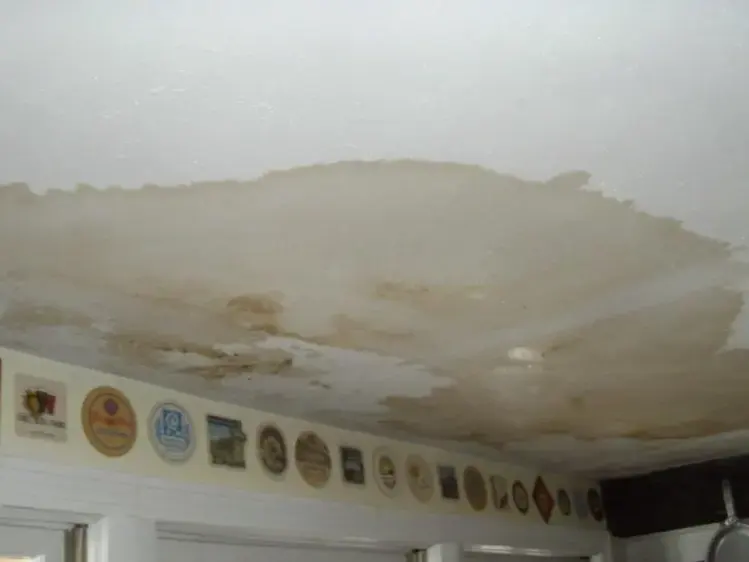
Where ceiling leaks start in Franklin homes
Most two-story homes in Franklin's newer neighborhoods put a bathroom, a laundry room or an air handler over a living area. A wax ring that fails under a toilet, a tub overflow, a washer hose or a condensate pan that overflows in July all end up in the ceiling below. In older downtown homes, plaster ceilings hold water longer and then crack or drop in pieces. Roof and storm leaks come through the ceiling too; those are covered on roof leak water damage.
- Toilet wax rings and supply lines in upstairs bathrooms
- Shower pans and tub overflows
- Second-floor laundry rooms and washer hoses
- Attic air handlers with clogged condensate lines
How a ceiling is dried without replacing it all
Water in a ceiling spreads along the joists and the back of the drywall, so the stain rarely shows the full footprint. The tech who does the walkthrough uses thermal imaging and pinless meters to map it. Drywall that has sagged, softened or held standing water comes down, along with the wet insulation above it, because soaked insulation keeps the framing wet. Drywall that is only damp can often be dried in place with air movers and small access holes.
The drying team runs LGR dehumidifiers and takes readings on the joists and the walls below until they reach the drying goal. The EPA moisture information explains why wet ceilings should be dried within 24 to 48 hours.
Never stand under a sagging ceiling to poke it. Drain it from the side with a long screwdriver and a bucket, or leave it for the crew.
Plaster, drywall and what comes next
Plaster ceilings in Franklin's historic homes are heavy and dry slowly; they are checked for loose keys before anyone decides to keep them. After drying, the leak above is repaired and the ceiling is patched or replaced. Condensate leaks have their own page, AC condensate leak water damage, and the EPA WaterSense leak checklist helps find bathroom leaks early.