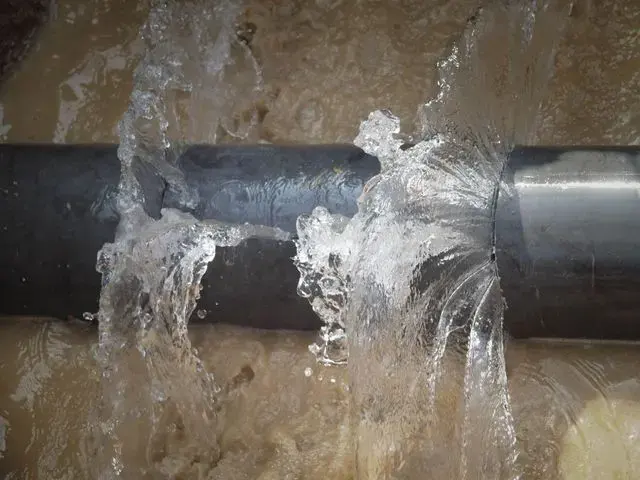
Why pipes burst in Franklin houses
Franklin has two very different housing stocks, and both burst pipes. The older homes around Main Street and Hincheyville can still carry sections of galvanized steel supply pipe that rust from the inside until a threaded joint lets go. The large subdivisions built from the 1990s on use copper, CPVC and PEX, which fail at fittings, at stubs behind appliances and where a line was nicked during a remodel. Homes built through the mid-1990s can also carry polybutylene, which is known for failing without warning.
- Corroded galvanized joints in older crawlspaces and kitchen walls
- Cracked CPVC fittings and failed push connectors on newer lines
- High street pressure without a working pressure reducing valve
- Lines on exterior walls and in crawlspaces that split in hard freezes
Freeze damage has its own page: frozen pipe cleanup.
How the cleanup is done without gutting the house
The extraction crew pulls standing water first. Then the tech who does the walkthrough maps moisture with thermal imaging and meters, because water from a burst pipe runs along joists, down wall cavities and through the floor into the crawlspace far from where it started. Only the drywall and ceiling that the meters show cannot dry in place come out; the rest dries through small access holes with air movers pushing into the cavities.
Speed matters because clean supply water does not stay clean. After about 48 hours it picks up contamination from the materials it soaks and is treated as Category 2, which means more removal. The EPA WaterSense leak checklist is a good way to find smaller leaks before they become burst pipes.
Find the main shutoff before you need it. In many Franklin homes it sits just inside the crawlspace door or in the garage near the water heater.
Drying framing, subfloor and ceilings
The drying team sets air movers to the evaporation load of each room and runs LGR dehumidifiers, with daily readings on framing, subfloor and any hardwood. When the water reached the crawlspace, that space gets its own dehumidifier and readings on the joists and sill plate. The full process is on the structural drying page, and ceiling damage is covered on ceiling leak water damage. Ready.gov winter weather tips cover keeping pipes from freezing during Middle Tennessee cold snaps.