Franklin's commercial water losses
Franklin's commercial space runs from the office towers and medical buildings of Cool Springs to the 19th century brick storefronts along Main Street and the restaurants and shops around The Factory. Each floods differently. Office buildings lose floors to sprinkler lines, restroom supplies and roof drains; storefronts downtown share walls and old plumbing with the buildings next door; restaurants deal with grease-trap and floor drain backups.
- Fire sprinkler line breaks and accidental head activations
- Restroom supply lines and water heaters above suites
- Roof drains and flat-roof leaks after spring storms
- Floor drain and grease line backups in kitchens
Phased drying that keeps the business open
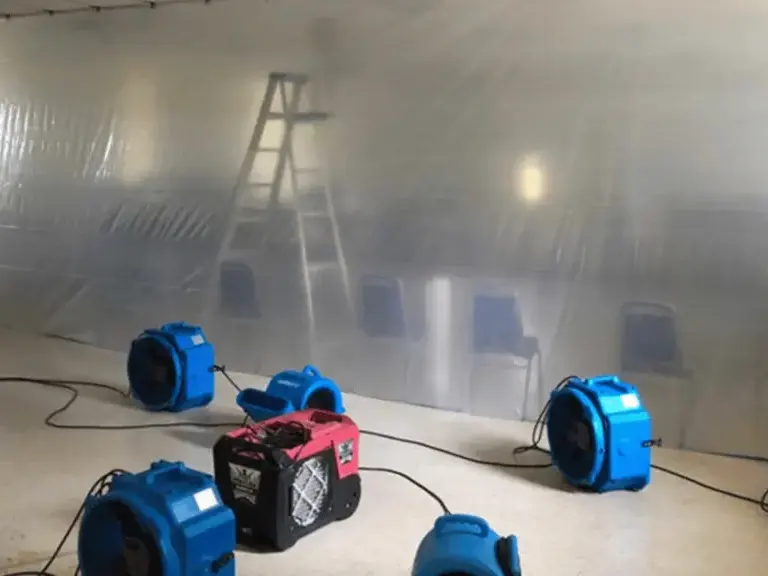
The extraction crew pulls standing water from carpet tile, hard floors and ceiling spaces first. The tech who does the walkthrough maps moisture across the affected suites and the ones next door, then the mitigation team sets containment with plastic sheeting and HEPA air scrubbers so work can continue in dry areas. Wet ceiling tile and drywall that cannot dry are removed; the rest dries in place with air movers and LGR dehumidifiers sized to the space, often scheduled around business hours.
Where the water came from a drain or flood, Category 3 protocol applies, with porous materials removed and an EPA-registered antimicrobial applied. OSHA cleanup safety information covers the workplace hazards of a water loss.
Keep a simple emergency sheet: where the main and zone valves are, who controls the sprinkler system and who the property manager is. It saves the first hour.
Documentation for owners, tenants and insurers
Commercial claims often involve a building owner, a tenant and more than one insurer. The claim file carries the moisture map, daily psychrometric logs, timestamped photos before removal and the scope for each area. Historic storefronts downtown need extra care with plaster, brick and old-growth wood; see structural drying. The Ready.gov business preparedness page helps plan for disruptions, and sewage losses are covered on sewage backup cleanup.