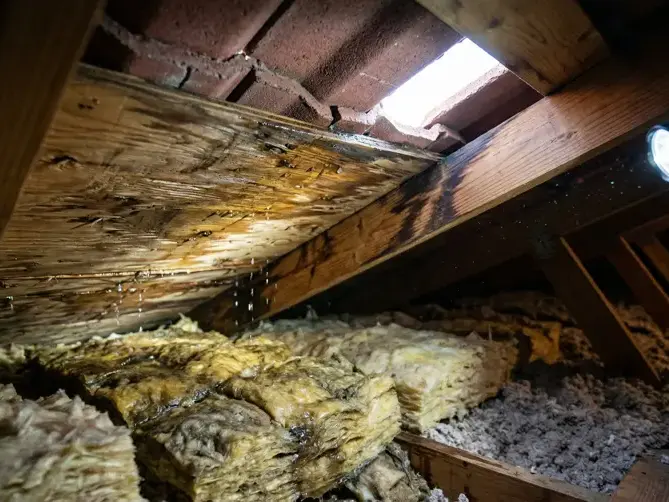
How storms get water into Franklin attics
Middle Tennessee's severe-storm season runs from March into May, with a second round of summer thunderstorms. Wind-driven rain finds the weak points: step flashing along walls and chimneys, pipe boots on plumbing vents, ridge vents, skylights and shingles lifted or torn by wind. Hail and fallen limbs add more openings. In the complex rooflines of many newer Franklin homes, valleys and dormers collect water fast.
- Worn pipe boots and loose flashing at walls and chimneys
- Wind-lifted shingles and ridge vents in spring storms
- Hail damage and punctures from fallen limbs
- Clogged gutters backing water under the roof edge
Drying the attic, not just the ceiling
By the time a stain shows on a ceiling, the attic above has usually been wet for a while. The tech who does the walkthrough goes into the attic with thermal imaging and meters to find how far the water spread across the decking, rafters and insulation. Blown-in or batt insulation that is soaked is removed, because it holds water against the ceiling drywall and framing.
The drying team dries the attic and the rooms below together, with air movers and dehumidifiers and daily readings on the decking, joists and drywall. If the leak ran into walls, readings go down the wall cavities too. For storm preparation, Ready.gov severe weather information is a good place to start.
Photograph roof damage from the ground right after the storm. Adjusters want to see it tied to the date of the storm.
The roof repair and the claim
A roofer handles the tarp and the permanent repair; restoration covers the water damage inside. The claim file carries the moisture map, the daily drying logs and timestamped photos of the attic and ceilings before anything is removed. Ceiling-only leaks from plumbing are on ceiling leak water damage, and the Tennessee Department of Commerce and Insurance publishes consumer help on filing property claims.