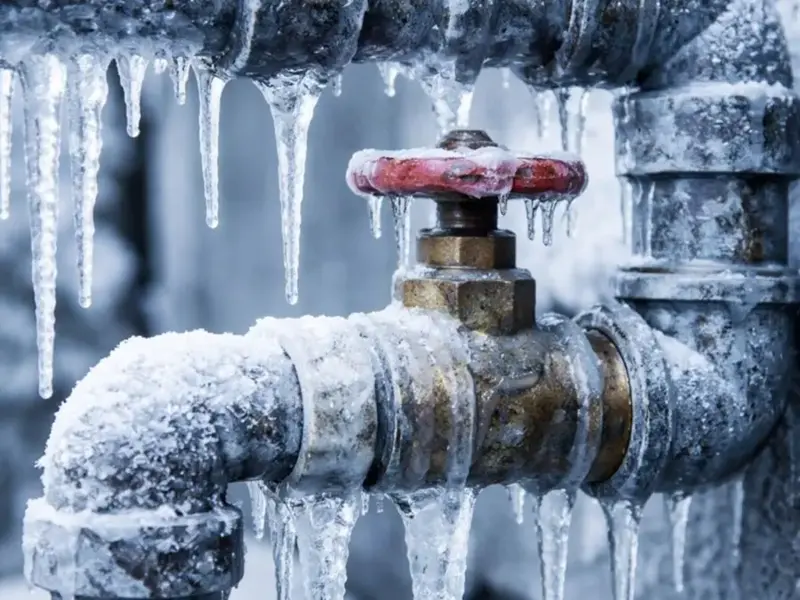
Why Franklin pipes freeze
Middle Tennessee winters are usually mild, so plumbing here is often run where a colder city would never allow it: through vented crawlspaces, along exterior walls, in garages and through attics above bonus rooms. When an arctic front drops temperatures into the single digits, as the December 2022 freeze did across the Nashville area, those unprotected lines freeze first. Water expands as it freezes, the pipe splits, and nothing leaks until the thaw.
- Supply lines in vented crawlspaces with open foundation vents
- Exterior-wall kitchen and bath lines in older Franklin homes
- Lines in garages and attic spaces over bonus rooms
- Hose bibs with a hose still attached
How the thaw cleanup works
The first job is finding every wet surface, because freeze damage often involves more than one split. The tech who does the walkthrough checks the crawlspace, the walls on either side of the break and the ceilings below any attic line. The extraction crew pumps water off the vapor barrier, pulls wet insulation down from the joists and extracts the floors inside.
Then the drying team sets dehumidifiers and air movers in the crawlspace and the living space, with daily readings on joists, sill plates and subfloor. Soaked fiberglass batts are removed, because wet insulation holds water against the wood. For keeping pipes from freezing next time, Ready.gov winter weather tips and the UT Extension both offer practical home advice.
Close the foundation vents and drip the faucets on outside walls when the forecast calls for a hard freeze. It costs little and saves a crawlspace.
After the drying
Equipment stays until the readings say dry. Once the framing and subfloor reach the drying goal, the crawlspace can get a new vapor barrier and insulation, and the plumber can finish permanent repairs. Related work is on the burst pipe cleanup and crawl space water damage pages.