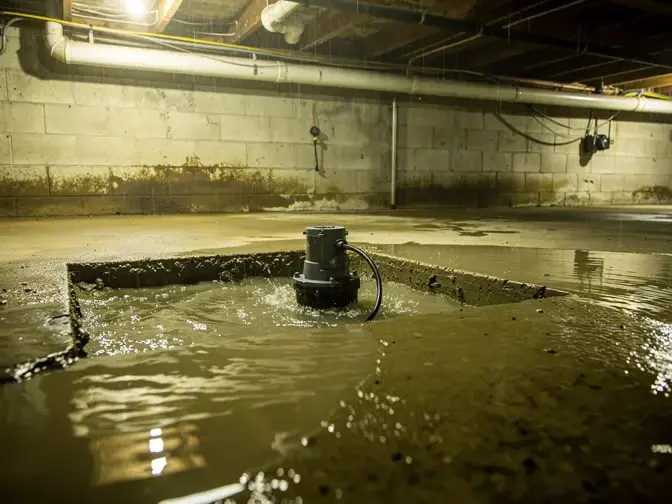
Why sump pumps fail in Franklin storms
A sump pump works hardest during exactly the storms most likely to knock out power. Spring thunderstorms across Middle Tennessee bring heavy rain and wind at the same time, so a pit that fills fast meets a pump with no electricity. Other failures are mechanical: a float switch that sticks, a check valve that lets water fall back, a discharge line clogged or frozen, or a pump simply worn out after years of cycling in clay soil that stays wet.
- Power outages during spring and summer storms
- Stuck float switches and failed check valves
- Discharge lines that are clogged, crushed or frozen
- Undersized pumps that cannot keep up with a heavy rain
How the overflow is cleaned up
The extraction crew pumps out the standing water and extracts carpet and hard floors. Groundwater from a sump pit has passed through soil and gravel, so it is treated as Category 2: hard surfaces are cleaned, and carpet pad that sat in it is usually removed. If storm water or a drain backup mixed in, the job moves to Category 3 protocol, with porous materials removed and an EPA-registered antimicrobial applied.
In an encapsulated crawlspace, a failed sump can leave water trapped on top of the liner. The crew pumps it off, lifts the liner where needed and dries the soil and framing below. The crawl space water damage page covers that work in detail.
A battery or water-powered backup pump is the single best upgrade for a Franklin sump. Most storm failures are power failures.
Drying and preventing the next one
The drying team sets LGR dehumidifiers and air movers and records readings daily until the slab, walls and framing reach the drying goal. Once dry, a plumber or waterproofing contractor can replace the pump and add a backup. Ready.gov power outage tips cover keeping critical equipment running, and National Weather Service flood safety explains flash flood warnings. Related work is on basement flooding cleanup.