Humid summers, attic air handlers

AC Condensate Leak Water Damage in Franklin, TN

An air conditioner in a Franklin July pulls gallons of water out of the air every day. When the condensate line clogs, that water overflows the pan in the attic or closet and soaks the ceiling below. The restoration team dries the ceiling, insulation and framing and documents the loss.

(888) 849-5796Get the AC leak dried out
24/7 dispatch IICRC S500 drying goal Daily moisture logs
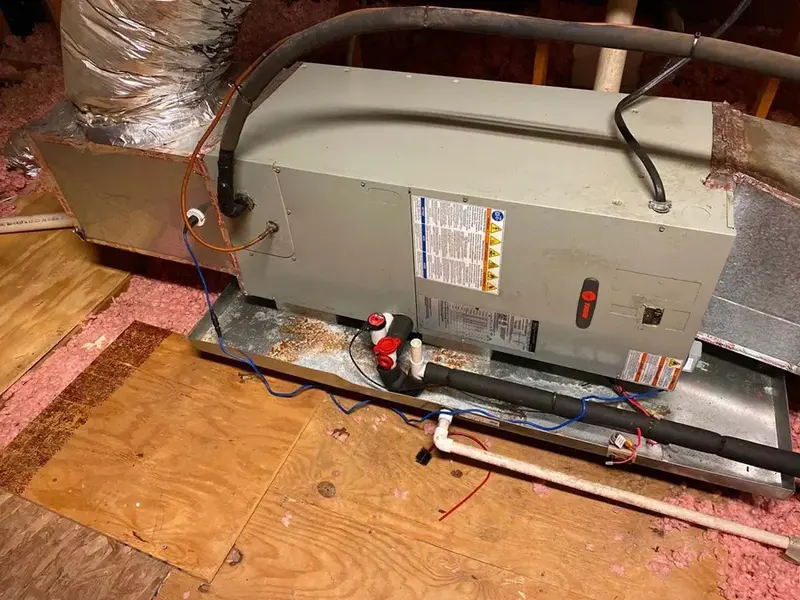
Attic air handler sitting in its drain pan on plywood over insulation
Water categoryCategory 1 to 2
WhereAttic and closet air handlers
StandardIICRC S500 drying goal
Dispatch24/7 in Franklin
First steps

What to do the moment you find an AC condensate leak

  1. Turn the AC off at the thermostat

    Stopping the system stops new condensate. If the air handler is in the attic, switch off its breaker too if water is near it.

  2. Check the pan and float switch

    From the attic hatch or closet, look for a full secondary pan or water around the unit. A tripped float switch means the line is clogged.

  3. Protect the room below

    Put buckets and towels under drips and move furniture and electronics away from the stain.

  4. Photograph and call

    Photograph the ceiling, the air handler and the pan, then call for drying and an HVAC tech for the drain line.

Loss ledger
Water categoryCategory 1 condensate, Category 2 once it sits
Typical classClass 2 with wet ceiling drywall and insulation
EquipmentThermal imaging, pinless meters, air movers, LGR dehumidifiers
Drying goalWithin 2 to 4 points of a dry reference material
Typical cost ranges

What does AC condensate leak water damage cost in Franklin, TN?

In Franklin, TN, AC condensate leak water damage typically runs $800 to $5,500. A small stain under a closet unit sits at the low end; an attic pan that overflowed for days into ceilings, insulation and walls sits at the high end. The HVAC repair is separate.

Small stain or closet unit

$800 to $1,800
  • Moisture mapping
  • In-place drying
  • Daily readings

Attic overflow, one ceiling

$1,800 to $3,500
  • Wet insulation removed
  • Ceiling drywall cut where wet
  • Joist drying

Ran for days, several rooms

$3,500 to $5,500+
  • Ceilings and walls dried
  • Flooring below checked
  • Full documentation

The drivers are the water category, the square footage that got wet, the material class (vinyl and drywall versus plaster, heart pine and hardwood) and how fast drying started. For a planning number, try the Franklin water damage cost calculator.

How the work is held to standard

How AC condensate leak water damage is handled in Franklin

Every Franklin job runs in the same order, because the order is what separates a finished dry-out from a cosmetic one.

Rapid local response

Franklin water damage pros dispatch around the clock, because water keeps wicking into subfloor, plaster and crawlspace framing after dark.

IICRC S500 drying standard

The drying team works to IICRC S500, the industry drying standard: structural drying, not just surface drying.

Claim-ready documentation

A moisture map, daily readings and timestamped photos go into the file your insurer reviews.

Williamson County water experts

Crawlspaces over clay, attic air handlers and plaster walls downtown are everyday work in Franklin.

  1. Map the moisture

    The tech who does the walkthrough finds the source and maps wet materials with thermal imaging and pinless meters before any equipment goes down.

  2. Extract

    The extraction crew pulls standing water with truck-mounted or portable extraction, so the water leaves the house instead of wicking further.

  3. Set the drying

    The drying team sizes air movers to each room's evaporation load and runs LGR dehumidifiers, with desiccants for dense materials.

  4. Read it daily

    Readings go into the drying log every day, and the equipment moves to whatever is still giving up water.

  5. Verify and document

    Equipment comes out when the wet material sits within 2 to 4 points of a dry reference, and the logs go into the claim file.

Why condensate leaks are so common in Franklin

Franklin summers are hot and humid, and many homes built from the 1990s on put the second air handler in the attic above bonus rooms and bedrooms. On a muggy day an air conditioner can pull several gallons of water out of the air. That water drains through a small PVC condensate line. When the line clogs with algae and sludge, the primary pan overflows into a secondary pan, and when the secondary pan has no float switch, a failed switch or a rusted bottom, the water goes into the ceiling.

  • Algae and sludge clogs in the condensate drain line
  • Rusted or cracked secondary pans under attic units
  • Float switches that were never installed or have failed
  • Frozen coils that dump a large volume of water when they thaw

How the damage is dried

Condensate leaks are usually slow, so by the time a stain appears the insulation around the air handler has often been wet for days. The tech who does the walkthrough maps the attic and the ceiling below with thermal imaging and meters. Soaked insulation and ceiling drywall that has sagged come out; damp drywall and framing are dried in place with air movers and dehumidifiers.

The drying team takes readings daily until the ceiling, joists and any walls the water ran down reach the drying goal. The Department of Energy air conditioning page covers routine maintenance, including keeping the condensate drain clear.

Pour a cup of white vinegar down the condensate line access each spring and fall, and make sure the secondary pan has a working float switch.

The HVAC repair and the claim

An HVAC tech clears the line, replaces a rusted pan and adds or repairs the float switch; restoration handles the water damage it caused. Because condensate leaks are often slow, insurers look closely at how long the leak ran, so the moisture map and timestamped photos matter. Related work is on ceiling leak water damage, and the EPA moisture information explains why damp insulation should not be left in place.

Related services

Related water damage services in Franklin

Service area

AC condensate leak water damage across Franklin

The Franklin restoration crew handles AC condensate leak water damage across ZIP codes 37064, 37067 and 37069, from Historic Downtown and Hincheyville to Westhaven, Cool Springs, McKay's Mill and Berry Farms.

The same crews cover Brentwood, Thompson's Station, Spring Hill, Nolensville, Arrington, College Grove, Fairview and Leiper's Fork.

Franklin, TN and the Williamson County towns around it

Every Franklin area and ZIP

Questions

AC Condensate Leak Water Damage questions in Franklin, TN

Why is water coming from my ceiling in summer?

In Franklin the most common cause is an attic air handler whose condensate line clogged, letting the drain pan overflow into the ceiling below.

Can I keep running the AC with a leak?

Turn it off until the drain line is cleared. Running it keeps adding water to the ceiling and insulation.

Is AC condensate damage covered by insurance?

Sudden overflow damage may be covered, while damage from a long, slow leak or lack of maintenance may not be. Coverage depends on your policy, so it is worth checking with your own insurer.

Does the attic insulation have to come out?

Soaked insulation around the unit is usually removed, because it holds water against the ceiling. Lightly damp areas can sometimes dry in place.

How long does drying take?

A contained condensate leak usually dries in two to four days once the AC is off or repaired. Larger or longer leaks take more time.

How do I prevent another condensate leak?

Have the line flushed each season, keep a working float switch on the pan, replace rusted pans and change filters so the coil does not freeze.

Emergency water removal, 24/7

AC leaking through your Franklin ceiling? Call now.

Attic and ceiling drying, wet insulation removal and documentation after condensate overflows.

(888) 849-5796Get the Franklin AC leak dried out
Call (888) 849-5796 24/7