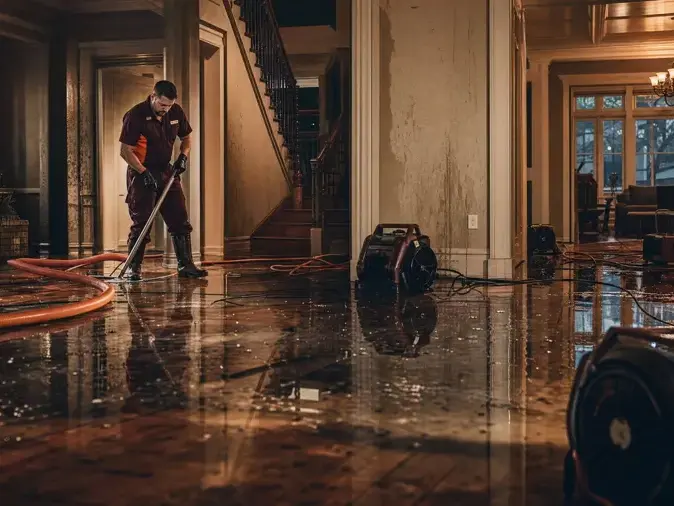
Why extraction comes before any fan
Air movers and dehumidifiers remove water as vapor, a few gallons a day per unit. A flooded room can hold hundreds of gallons. That is why the extraction crew pulls liquid water first: one pass with a truck-mounted unit removes more water than days of drying equipment. Every gallon that leaves as liquid is a gallon that never soaks into the subfloor, the bottom of the drywall or the heart-pine boards of an older Franklin house.
In Franklin the water often ends up somewhere other than where it started. A supply leak on the main floor runs through the floor into the crawlspace, and a storm through a patio door wicks under laminate for yards. The tech who does the walkthrough checks the crawlspace and the next room over before the extraction plan is set.
- Truck-mounted extraction for carpet, pad and large hard floors
- Weighted extraction tools that press water out of carpet and pad
- Submersible pumps for basements and crawlspaces with standing water
- Portable units for condos and upstairs rooms the hoses cannot reach
Carpet, hardwood and crawlspaces each get a different pass
Carpet and pad soaked with clean water can often be extracted and dried in place. Pad soaked with gray or black water is removed, because porous materials touched by Category 3 water get removed, not dried. Hardwood and engineered floors get surface extraction plus specialty drying mats that pull water up through the boards. A crawlspace gets pumped, the vapor barrier is lifted or replaced, and the soil and framing are dried with dehumidification sized to that enclosed space; the crawl space water damage page covers that work.
The EPA mold and moisture information explains why materials need to be dried within 24 to 48 hours of getting wet, which is the clock extraction is racing.
Do not use a household vacuum on standing water. It is an electrical hazard, and it spreads contaminated water if the source is a drain or a storm.
What happens after the water is out
Once the standing water is gone, the drying team sets air movers and LGR dehumidifiers to the evaporation load of each room and takes readings every day. Equipment stays until the readings say dry, not until the floor looks dry. The full drying process is on the structural drying page, and flooding from the Harpeth or a flash storm is covered on flash flood cleanup. For flood safety basics, Ready.gov flood information is worth a read.