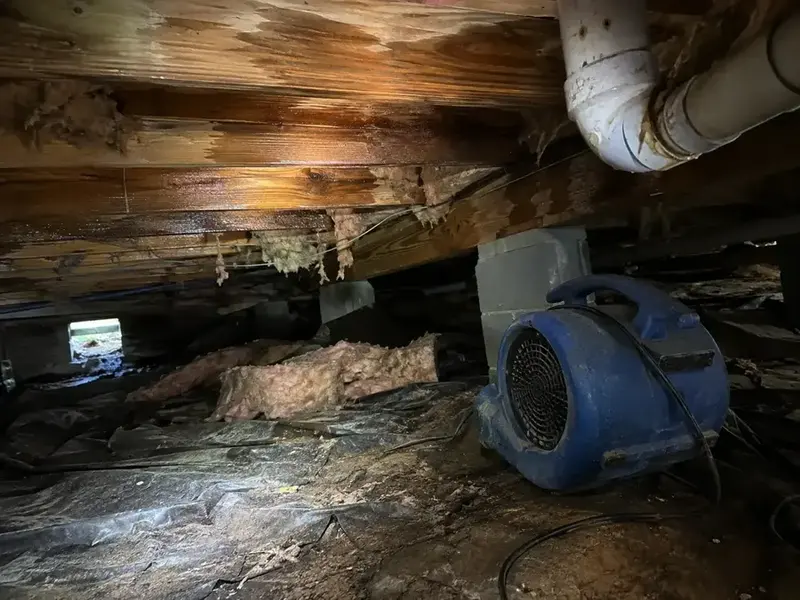
Why Franklin crawlspaces take on water
Crawlspaces are the most common foundation under Franklin homes, from the Victorian houses in Hincheyville to many of the 1990s and 2000s homes in Fieldstone Farms and McKay's Mill. The soil underneath is mostly clay over limestone, which drains slowly and holds water against the footings after a heavy rain. Add a humid summer, vents that pull damp air in, and supply and drain lines running under the floor, and a crawlspace becomes the place water collects without anyone noticing.
- Supply line and drain leaks that drip onto the vapor barrier for weeks
- Storm water running toward the foundation from downspouts and poor grading
- Failed crawlspace sump pumps during heavy spring storms
- Condensation on ducts and pipes in muggy July and August air
How a crawlspace is dried properly
A wet crawlspace cannot dry on its own, because vented air in a Franklin summer is often wetter than the wood it is supposed to dry. The extraction crew pumps out standing water, then removes the wet vapor barrier and any insulation hanging soaked from the joists. The tech who does the walkthrough takes readings on the joists, sill plates and subfloor, and checks the floors above for cupping.
The drying team closes the vents, sets an LGR or desiccant dehumidifier sized to the enclosed space, and adds air movers to push dry air across the framing. When the water came from a drain or a storm, the framing is cleaned and treated with an EPA-registered antimicrobial before drying. Anyone going into a tight crawlspace should respect the hazards; OSHA confined space information explains why the crews work in pairs with lights and ventilation.
A musty smell in the house, cupping hardwood or a sudden jump in humidity upstairs are often the first signs of water under the floor.
Readings, not guesses
Crawlspace framing dries slower than a room above it. Equipment stays until the joists and subfloor read within 2 to 4 points of dry reference wood, and the drying log goes into the file for your insurer. After drying, a new vapor barrier and fixes to grading or the sump keep it from happening again; the sump pump failure cleanup page covers pump problems. The EPA moisture information explains why damp crawlspaces matter to the air inside the home.