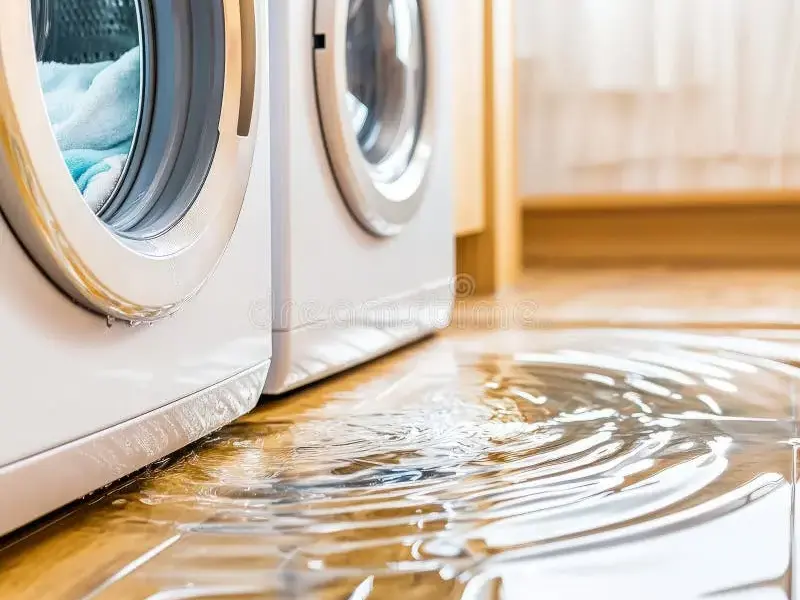
Why appliance lines fail
Every washing machine, dishwasher, refrigerator ice maker and water filter hangs on a small supply line at full household pressure. Rubber washer hoses swell and split with age, thin plastic ice-maker tubing cracks when a fridge is pushed back, and compression fittings under the sink loosen over years of vibration. Because the appliance hides the leak, the water often runs for hours before anyone sees it at the edge of the floor.
- Rubber washer hoses past about five years old
- Plastic ice-maker and filter tubing behind refrigerators
- Dishwasher supply fittings and drain hose connections
- Second-floor laundry rooms without a drain pan
Drying under cabinets and floors
Kitchen and laundry leaks spread where they cannot be seen: under the cabinets, beneath laminate and vinyl plank, into the bottom of the drywall and down through the subfloor. The extraction crew removes standing water, then the tech who does the walkthrough uses thermal imaging and meters to find the edges. Cabinet toe kicks are often removed so air can move under the cabinet bases, and hardwood gets drying mats that pull water up through the boards.
In a home over a crawlspace, the water frequently reaches the subfloor and joists below, so the crawlspace is checked and dried too. The EPA WaterSense leak checklist covers simple checks for appliance leaks.
Swap rubber washer hoses for braided stainless ones, and leave a few inches behind the fridge so the ice-maker line is not crushed.
Readings and the claim
The drying team logs readings on cabinets, flooring, walls and subfloor every day until they reach the drying goal. The claim file carries photos of the failed part, the moisture map and the drying logs. Related pages: water heater failure cleanup and burst pipe cleanup. The Consumer Product Safety Commission lists appliance recalls, including water line defects.